
Modern manufacturing and industrial facilities rely on connected systems for everything from machine monitoring and process control to quality inspection and supply chain integration. The network infrastructure that underpins these systems is as critical as the machines and software it connects. A failure in the industrial network can halt production, corrupt data, and delay supply chain operations in ways that cascade far beyond the immediate point of failure. Understanding the scope of industrial networking solutions, how these differ from standard enterprise networks, and what principles guide effective deployment is essential for operations managers, plant engineers, and IT teams responsible for industrial connectivity.
What Are Industrial Networking Solutions?
Industrial networking solutions refer to the combination of hardware, protocols, and architecture designs used to connect machines, sensors, controllers, and systems within a manufacturing or industrial environment. Unlike office and commercial networks, which primarily carry email, file transfers, and business application data, industrial networks carry time-sensitive control signals, real-time sensor data, and machine-to-machine communication where latency, reliability, and determinism are critical requirements.
The scope includes the physical cabling and switching infrastructure, the communication protocols used by industrial devices (such as PROFINET, EtherNet/IP, Modbus TCP, and OPC-UA), the network architecture design that separates production networks from corporate networks, and the cybersecurity measures that protect control systems from both internal errors and external threats.
Industrial Ethernet Solutions: The Backbone of Modern Plant Networks
Industrial Ethernet solutions have largely replaced proprietary fieldbus systems in new industrial installations over the past decade. Standard Ethernet technology, adapted with ruggedised hardware, managed switching, and industrial-grade protocols, provides the bandwidth, flexibility, and interoperability that modern industrial systems require.
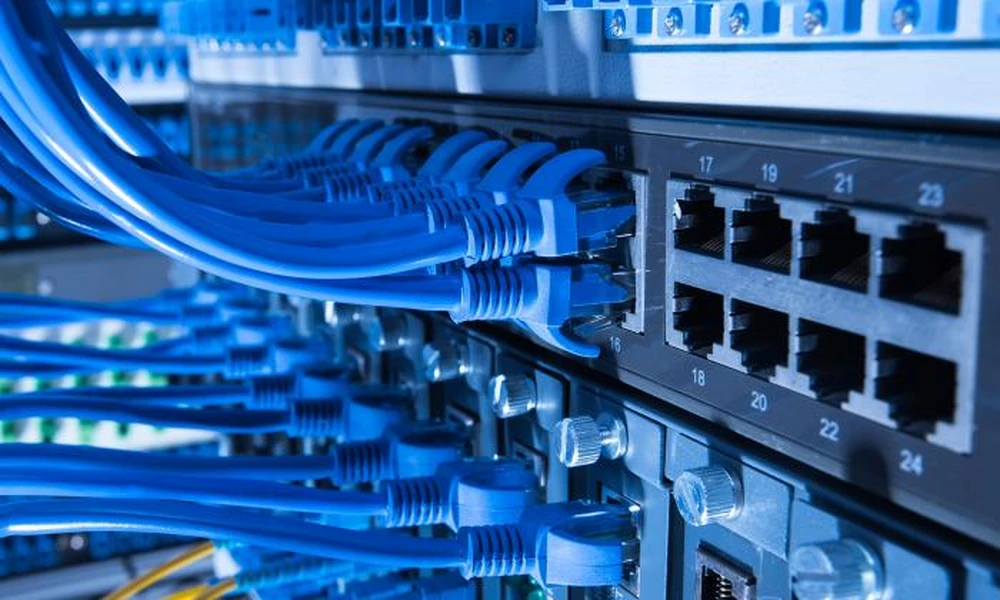
Industrial Ethernet switches differ from commercial office switches in several important ways. The hardware is designed to operate across a wider temperature range, withstand vibration and shock, and resist dust and moisture ingress to an IP-rated standard appropriate for the installation environment. Managed industrial switches provide network administrators with visibility into traffic patterns, port status, and fault conditions, and support features such as VLAN segmentation, Quality of Service prioritisation, and redundant ring topologies that are essential for reliable industrial network operation.
The choice of industrial Ethernet protocol depends on the control systems installed in the facility. Siemens PROFINET, Rockwell EtherNet/IP, and Modbus TCP are among the most widely deployed protocols in Indian manufacturing facilities, and the industrial Ethernet infrastructure must be compatible with the protocol requirements of the connected devices.
Enterprise Networking Solutions vs Industrial Networking
Enterprise networking solutions and industrial networks share the same underlying Ethernet and IP technology but serve fundamentally different requirements. Enterprise networks prioritise availability, throughput, and user experience for office and business application traffic. Industrial networks prioritise determinism, low latency, and reliability for control and monitoring traffic where a dropped packet or delayed signal can cause a process upset or safety event.
The practical consequence is that enterprise and industrial networks are typically designed and managed separately, connected through a demilitarised zone or firewall that controls what traffic can pass between the two domains. This separation protects the control network from the security risks and traffic variability of the enterprise network, while still allowing the data integration that modern manufacturing intelligence applications require.
Network infrastructure solutions that bridge these two domains , enabling data to flow from the shop floor to enterprise ERP and analytics systems without exposing the control network , are a key element of the Industrial Internet of Things architecture that most manufacturers are now implementing.
Supply Chain Automation and Industrial Networks
Supply chain automation depends on industrial networks to function. Automated warehouse management systems, barcode and RFID scanning infrastructure, automated guided vehicles, and conveyor and sortation systems all require reliable, low-latency network connectivity to operate correctly. A network interruption in a distribution centre’s control infrastructure can stop automated picking and dispatch operations within seconds.
The network requirements for supply chain automation environments differ from those of process manufacturing. The high mobility of automated vehicles, the large physical footprint of warehouse and logistics facilities, and the mix of wired and wireless connected devices create infrastructure challenges that require specific expertise in industrial wireless networking, including Wi-Fi 6 for high-density device environments and private 5G for large outdoor logistics sites.
Industrial Cybersecurity: Protecting the Connected Plant
The convergence of operational technology (OT) and information technology (IT) networks has significantly expanded the cybersecurity attack surface of industrial facilities. Control systems that were previously isolated from external networks are now increasingly connected to enterprise systems and, in some cases, to cloud platforms and remote monitoring services. This connectivity brings operational benefits but also introduces cybersecurity risks that traditional industrial installations did not face.
Effective industrial cybersecurity begins with network architecture , maintaining clear segmentation between the control network and external networks, implementing industrial firewalls and intrusion detection at the boundary between OT and IT domains, and controlling remote access through authenticated and encrypted channels. Asset inventory, patch management for industrial controllers and HMI systems, and regular vulnerability assessment are equally important elements of a comprehensive industrial cybersecurity programme.
Choosing Industrial Networking Solution Providers
Selecting a provider for industrial networking solutions requires assessing technical expertise, product range, integration capability, and support structure. Providers with experience in the specific industrial sectors and control system platforms present in the facility are better positioned to design solutions that integrate correctly with existing systems and meet the reliability standards the environment demands.
The provider’s ability to design the network architecture, supply and configure the hardware, commission the installation, and provide ongoing support and maintenance is as important as the quality of the products supplied. Industrial networks are not set-and-forget infrastructure; these require ongoing management, periodic upgrades, and rapid fault response when issues arise that affect production continuity.